
Intelligence Brief

The Call-Back You Choose
The FTC says it is not calling to deactivate your phone number. One simple habit works against that call and its many cousins.

The Visitor Is the Clue
A man sentenced to 14 years met an elderly victim nearly a dozen times, in different cars. The family could not have known the script, but they could have noticed the visits.

Scams 101: What to Teach Your Parents About How a Scam Actually Works
Every scam that reaches an older adult runs the same six steps underneath a different story. Here is the sequence, the handful of instructions it always ends in, and one rule a family can agree on tonight.

Why Gold Keeps Coming Up
Pennsylvania State Police describe callers who tell people to turn savings into gold to "clear their name." The purchase may be the only moment a bank sees.
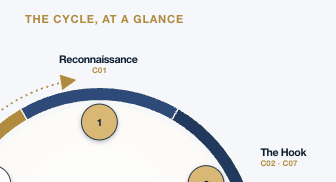
Why a Fraud Lifecycle Works, and How to Use One
A lifecycle turns a pile of warning signs into a sequence. This week's cases show how to match what you actually see to where a scheme is in its run.

A Rule for Paying a Fee Over the Phone
A Mississippi sheriff's office warned this week of callers saying a $50,000 arrest warrant could be settled for $5,000. A household rule that takes an afternoon to agree.

Five Minutes, No Confrontation
A daughter looked up a company before the second charge went through, and found it was six months old. The lookup, not a lecture, is what stopped it.

The Moment Is the Handoff
Four federal sentences landed this month for the same crime - a stranger collecting cash or gold at an older adult's door. That handoff is the clearest warning sign a family will get.
What 'Safekeeping' Sounds Like
A guilty plea in California puts a courier's script on the record, and the key word is one a teller or adviser can hear.

Being Careful Is Not a Plan
How to protect your aging parents from financial scams - the doors a family can close in an afternoon, and the one rule to agree on before the phone rings

When the Call-Back Confirms the Lie
Callers posing as federal agents now use real agents' names from spoofed real office numbers, so checking with the office no longer settles anything

The Bank Called, Then a Driver Came for the Cards
A San Diego sentencing shows how a spoofed caller ID and a rideshare pickup turned a fraud warning into the fraud itself.

A Government Permit Invoice Scam Crosses County Lines
Two county governments this month reported the same phishing mechanism — a real case number, a fake domain, a demand to pay by wire.

A Nevada Case Shows Scam Couriers Now Collect Gold, Not Just Cash
A pig-butchering scheme moved a victim's savings through cash and bullion handoffs across two states

A County's Own Arrest Log Became a Targeting Tool
Scammers mining public jail rosters to identify a defendant's family, then calling to demand bail money, has now surfaced in three counties this year — and one sheriff just pulled the list

The Accidental Deposit Script
An Irvine, California arrest exposes a bank-impersonation scheme built on a single believable sentence

The Checks That Stopped Working
The FBI's own advisory on generative AI lists four things criminals now do with it. Read against the advice families have been given for twenty years, it is an inventory of retired safety checks — and two of them are still in the advisory's own tips.

The Entry Is the Exposure
Prize fraud is old enough to have its own federal statute. What is worth a second look is that the search demand sits on the entry side, and that is where the research says the risk starts.

The Video Call Isn't Proof Anymore
What a new federal fraud case means for the professionals who protect older adults