
Intelligence Brief

The Call-Back You Choose
The FTC says it is not calling to deactivate your phone number. One simple habit works against that call and its many cousins.

The Visitor Is the Clue
A man sentenced to 14 years met an elderly victim nearly a dozen times, in different cars. The family could not have known the script, but they could have noticed the visits.

Scams 101: What to Teach Your Parents About How a Scam Actually Works
Every scam that reaches an older adult runs the same six steps underneath a different story. Here is the sequence, the handful of instructions it always ends in, and one rule a family can agree on tonight.

When Someone Offers to Get It Back
California's attorney general listed recovery scams among the crypto schemes he warned about on October 20. A loss can make the next call sound like help.

Where the $248,000 Went
A Connecticut indictment follows one retirement withdrawal through five bank accounts and a copier wholesaler. The first step looked like ordinary banking.

Why Gold Keeps Coming Up
Pennsylvania State Police describe callers who tell people to turn savings into gold to "clear their name." The purchase may be the only moment a bank sees.

California Adds a Way to Pull Stolen Crypto Back
Senate Bill 1208 lets the Attorney General ask a court to return stolen cryptocurrency, even when the perpetrators are overseas. The same press conference advised against crypto ATMs.
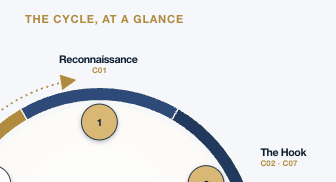
Why a Fraud Lifecycle Works, and How to Use One
A lifecycle turns a pile of warning signs into a sequence. This week's cases show how to match what you actually see to where a scheme is in its run.

A Rule for Paying a Fee Over the Phone
A Mississippi sheriff's office warned this week of callers saying a $50,000 arrest warrant could be settled for $5,000. A household rule that takes an afternoon to agree.

Who Sees the Statements?
A bookkeeper for an elderly Texas couple is accused of taking at least $1.2 million over six years. The question for families is who else looks at the accounts.

When the Money Leaves in a Shoebox
An 82-year-old in Florida handed $18,400 to a stranger who said she worked for a federal agency. How to bring up money with a parent without taking over.

Told to Buy Gold to Protect It: 168 Months for an Augusta Courier
DOJ's primary release shows the victim was walked through buying cryptocurrency and gold before the courier arrived. Each purchase was a transaction someone else could see.

The Recruiter Who Sent the Bondsmen
A Canadian man received 33 months for recruiting people to travel to the United States and collect cash from about 20 older Americans. Most enforcement news is about the courier. This one is about the person who hired him.

Arrested at the Door: A Gold Courier Stopped Before the Second Pickup
Michigan deputies caught a courier walking up to an elderly woman's home to collect $60,000. She had already lost nearly $500,000, including $237,000 in gold coins.

Five Minutes, No Confrontation
A daughter looked up a company before the second charge went through, and found it was six months old. The lookup, not a lecture, is what stopped it.

When She Won't Talk About It
A sister reported losing $200,000 to a fake prize. She moved the conversation to WhatsApp and says it isn't anyone's business. What an adult child can still do when a parent won't engage.

The Moment Is the Handoff
Four federal sentences landed this month for the same crime - a stranger collecting cash or gold at an older adult's door. That handoff is the clearest warning sign a family will get.

What 'Safekeeping' Sounds Like
A guilty plea in California puts a courier's script on the record, and the key word is one a teller or adviser can hear.

A Text About a Purchase, Then Three Pickups
A Reno courier received 45 years in a case that began with a link and ended with cash and gold at the door.

The Story Is the Costume
What twenty-four federal romance and pig-butchering prosecutions in Larigent's case database say about how the money actually moves, who gets prosecuted, and where a professional could have stopped it